|
| |
|
| |

|
|
|
|
TCHS 4O 2000 [4o's nonsense] alvinny [2] - csq - edchong jenming - joseph - law meepok - mingqi - pea pengkian [2] - qwergopot - woof xinghao - zhengyu HCJC 01S60 [understated sixzero] andy - edwin - jack jiaqi - peter - rex serena SAF 21SA khenghui - jiaming - jinrui [2] ritchie - vicknesh - zhenhao Others Lwei [2] - shaowei - website links - Alien Loves Predator BloggerSG Cute Overload! Cyanide and Happiness Daily Bunny Hamleto Hattrick Magic: The Gathering The Onion The Order of the Stick Perry Bible Fellowship PvP Online Soccernet Sluggy Freelance The Students' Sketchpad Talk Rock Talking Cock.com Tom the Dancing Bug Wikipedia Wulffmorgenthaler       |
|
bert's blog v1.21 Powered by glolg Programmed with Perl 5.6.1 on Apache/1.3.27 (Red Hat Linux) best viewed at 1024 x 768 resolution on Internet Explorer 6.0+ or Mozilla Firefox 1.5+ entry views: 82 today's page views: 588 (60 mobile) all-time page views: 3878171 most viewed entry: 18739 views most commented entry: 14 comments number of entries: 1290 page created Tue Sep 22, 2026 04:31:42 |
|
- tagcloud - academics [70] art [8] changelog [49] current events [36] cute stuff [12] gaming [11] music [8] outings [16] philosophy [10] poetry [4] programming [15] rants [5] reviews [8] sport [37] travel [19] work [3] miscellaneous [75] |
|
- category tags - academics art changelog current events cute stuff gaming miscellaneous music outings philosophy poetry programming rants reviews sport travel work tags in total: 386 |

| ||
|
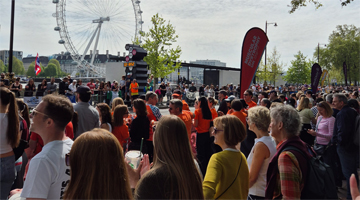 As stumbled upon [Embiggen!] The stay in London had also seen a visit to the Barbican Centre, a fine exemplar of brutalist architecture that also hosts two orchestras, and a bunch of ducks; other highlights included the Roman amphitheatre under Guildhall Yard and the popping into various bookstores, if mainly to take photographs of any wares that caught my fancy, for ordering on Amazon. This was more due to the inconvenience of lugging volumes home and expending limited luggage space, mind, and it would be nice were Amazon to open some brick-and-mortar storefronts to cater to readers... actually, they did, but from how all Amazon Books outlets are winding down - along with the local grocery delivery service - the rents may just be too darn high. Fortuitously, I also chanced upon the London Marathon that was held on the 26th of April, having had no clue that it was being run (well, other than the exaggerated rates for hotel rooms). This race had of course seen Sabastian Sawe officially break* the two-hour barrier for the marathon, a 26.22-milestone of a significance that will probably not be equalled (i.e. with the one-hour barrier) until humans either undergo tremendous evolution, or change their timekeeping standard to no longer rely on the hour (personally, the latter would be more likely) Quite incredibly, runner-up Yomif Kejelcha finished under two hours too, eleven seconds behind Sawe, and in his debut no less; it must have been a one-of-a-kind feeling to smash that historic mark, and not even win! It had been coming with researchers having (correctly) identified London and Berlin as having better odds than say New York or Boston for setting new records, due to generally favourable course profile and weather. A 1991 paper calculating the theoretical fastest human** finish as 1:57:58 seems like it might not hold for that much longer, but one wonders how much improvements in training/recovery regimens and footwear would contribute. As a brief spectator at the 25-mile (40.234km) mark observing competitors coming in with about 2:18 on the clock (translating to about a 2:25 finish, realistically less since they probably started slightly after the official gun time as non-favourites), it was difficult not to note how uniform their physiques were; sure, some were taller, but otherwise they looked largely cast out of the same mould, without much leeway for any excess muscle. To put this in perspective, the current national men's record is around 2:23, with the latest SEA Games gold requiring just 2:27 in Bangkok, though likely heavily discounted due to climate. One figures that genetic advantages might dominate amongst the top elite, what with the top times from 2025 being mostly African (specifically, Kenyan and Ethopian) runners, with a sprinking of Japanese (who do have a deeply-ingrained culture for it), and a few random Europeans and others. This has been partly attributed to favourable ankle-calf ratios, following the logic that the thinner one's calves and ankles (while still being sufficient to support the rest of the body), the more efficient it is to swing one's feet the approximately forty thousand strides required to complete a marathon at a competitive pace. That said, a sub-3 hour marathon appears recognized as a somewhat-reasonable target for most, assuming sufficient dedication. By my calculations, this would be roughly a 14km/h pace, which happens to still be some way from the roughly 10+km/h I managed over 10km whilst being passably fit several years back, and approximately the not-very-impressive 10:15 best for 2.4km back during National Service. Never quite enjoying running (that much) might have something to do with that, and perhaps my joints might thank me one day... [*Eliud Kipchoge had done it with twenty seconds to spare back in 2019, but this was not deemed a valid record due to the use of 41 rotating pacemakers to help with drafting, alongside other unsanctioned advantages such as laser guides from a pace car. Maintaining good pacing is harder than it may seem, with even splits (i.e. running at the same pace throughout) being theoretically ideal, but failing that a slight negative split (i.e. running the second half slightly faster than the first) is generally recommended in part for the mental advantages when overtaking***. A few advanced racers do go for positive splits (i.e. try to build an early lead, as in the frontrunning style).] [**Uma (Musume) reach 60+km/h in their typical races (over a few kilometers), which blows all human competition (with Usain Bolt maxing out at about 45km/h for the 100m sprint) out of the water. Humans do have a shot at marathon distance, however, supporting the title of being kings of endurance running.] [***As reflected by many Uma skills being triggered only when passing opponents.] Next: 天下英雄 唯独你和我!
|
|
||||||
 Copyright © 2006-2026 GLYS. All Rights Reserved. |
|||||||