|
| |
|
| |

|
|
|
|
TCHS 4O 2000 [4o's nonsense] alvinny [2] - csq - edchong jenming - joseph - law meepok - mingqi - pea pengkian [2] - qwergopot - woof xinghao - zhengyu HCJC 01S60 [understated sixzero] andy - edwin - jack jiaqi - peter - rex serena SAF 21SA khenghui - jiaming - jinrui [2] ritchie - vicknesh - zhenhao Others Lwei [2] - shaowei - website links - Alien Loves Predator BloggerSG Cute Overload! Cyanide and Happiness Daily Bunny Hamleto Hattrick Magic: The Gathering The Onion The Order of the Stick Perry Bible Fellowship PvP Online Soccernet Sluggy Freelance The Students' Sketchpad Talk Rock Talking Cock.com Tom the Dancing Bug Wikipedia Wulffmorgenthaler       |
|
bert's blog v1.21 Powered by glolg Programmed with Perl 5.6.1 on Apache/1.3.27 (Red Hat Linux) best viewed at 1024 x 768 resolution on Internet Explorer 6.0+ or Mozilla Firefox 1.5+ entry views: 95 today's page views: 448 (21 mobile) all-time page views: 3906169 most viewed entry: 18739 views most commented entry: 14 comments number of entries: 1295 page created Thu Oct 22, 2026 12:57:01 |
|
- tagcloud - academics [70] art [8] changelog [49] current events [36] cute stuff [12] gaming [11] music [8] outings [16] philosophy [10] poetry [4] programming [15] rants [5] reviews [8] sport [37] travel [19] work [3] miscellaneous [75] |
|
- category tags - academics art changelog current events cute stuff gaming miscellaneous music outings philosophy poetry programming rants reviews sport travel work tags in total: 386 |

| ||
|
Considering as the "Pandemic Game" has been repeatedly referenced on this blog regarding the COVID-19 pandemic (recognized by the WHO as having lasted just over three years, from March 2020 to May 2023), it may be time to finally compile and summarize my understanding as to what had actually happened, and what should have, but did not, happen. There are several reasons why I am writing this, at this particular time in February 2026, or some three years after the worst of the pandemic had been over. Firstly, I had intended to address the issue as a whole since at least 2022, but would be sidetracked by the continued emergence of new revelations and evidence. While one cannot discount future disclosures, the major narrative(s) on the pandemic have largely stabilized, which should allow an attempt at analyzing all these individual parts as components of a unified theory. Secondly, it had been next to impossible to discuss or question certain aspects of the pandemic while the event was in progress, publicly at least. Eminent clinicians had fallen foul of the establishment and (quite likely misguided) online lynch mob for voicing some entirely reasonable doubts, with reputations and careers destroyed (temporarily, in the best case). That said, it should be emphasized that some of the greatest (and most atrocious) misgivings have relatively little to do with any specific medical expertise, as shall be explained. Thirdly, this telling has been weighing on my mind for ages, and in putting keypress to Notepad, I hope to finally rid myself of this burden. Again, the standard disclaimer that all of the following on the topic is my personal interpretation, with no relation to any other entity or organization, applies. Further, the primary objective of the analysis is not intended to attack or lay blame on any individual or group, but to try and figure out what had actually transpired - and perhaps inform an improved response to future pandemics and crises. Prelude: Jubensha (剧本杀) - Ravi Velloor, Is Singapore prepared for a 'rent-a-human' world?; in The Straits Times, February 19, 2026 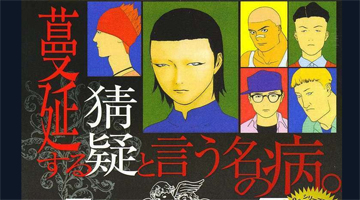 Liar Game would make a good jubensha, come to think of it (Source: mangafire.to) This remark on the precedence of questions over answers came at a quite opportune time for this post, borrowing as it does from Einstein's (and doubtless many other prominent scientists') philosophy on problem-solving. This assertion is also supported in jubensha, the live action role-playing genre so popular in China*, of which I had just participated in my first session. While they vary widely in setting and difficulty, a mix of logic and lateral thinking is typically required to solve the underlying mystery. However, there remain some significant distinctions between the (artificial) scenarios presented in jubensha games (and whodunnit novels) and real life. To begin with, the author (and gamemaster, or GM) has full control over all information presented to participants in jubensha. Given this, the solution can (and usually) depends on the (very) careful reading of minute details in the provided clues and rules. Next, what is not presented is often as critical as what is - for many cases, the solution can become trivial, or at any rate much easier, were an additional otherwise unremarkable fact to be revealed. Moreover, the information density can be expected to be high, in that there are only so many red herrings and dead ends that can be included, while remaining within the scope of the genre. Then, once the creative brainstorming part is dispensed with, what remains tends to be similar to a logic grid (word) puzzle** integrating event timings and alibis. In contrast, real life has no GM - or no single GM, at least. Especially with the advent of the Internet, the amount of available information and "facts" is essentially infinite, and has to be winnowed and filtered by the participants (i.e. all of humanity). That said, there is at least no compulsory viewpoint to be imposed on everybody, which implies reduced influence of perspective control (which can frankly become extremely contrived in jubensha) and pure logical deduction. This does unfortunately make discovering (some sort of) Truth feel like a fool's errand - how is it even possible to make sense of a firehose of oft-conflicting information, in our post-truth society? One approach is to simply disengage and disregard all news (i.e. give up), which however also relinquishes any potential of making a difference and righting wrongs. Another is to pick and stick to one's trusted information sources (i.e. GMs), which has led to much partisan division. A third, and apparently superior if more complex method would be to weigh and consider multiple sources - which is easier said than done, all the more when many issues are gatekept behind specialist credentials (e.g. can one speak about the practical impact of supposed inflation, if not an economist?) Which brings us back to the original point, on the importance of (the correct) questions - while the authoritative answer might never be known, the incongruence*** of relevant parties' behaviour can at least suggest very strongly that some shenanigans was involved. Such questioning will play a large role in the following analysis of the Pandemic Game, and hopefully inform as to some possible answers. [*Possibly better known as detective/deduction games (typically with less plot and structure) elsewhere, of which Mafia/Werewolf is probably the top example.] [**Some resemblance to linear algebra may be noted, where the jubensha ideal is to have a single canonical solution.] [***Analogous to proof by contradiction.] Degrees Of Wrongness A second major point on investigating the pandemic and various other topics, is that one can almost never be proven right or correct beyond absolute doubt, in the real world at least. In keeping with the jubensha theme, consider one of the oldest tropes - the murder victim in a locked room. In a game, it may be taken as an axiom that the only key to the room was in the victim's pocket, and the lock was unpickable. In real life, it is usually impossible to be certain that there is no duplicate key, and many locks are but momentary inconveniences for a semi-skilled guy with the appropriate tools. On this note, I have occasionally been reminded that I may not be correct, when advancing various hypotheses - which is fair enough. However, it is also the case that some hypotheses can be thought as almost certainly (and glaringly) incorrect****, while acknowledging that their opposite or converse is not then automatically correct. The example of what the Earth is, by Asimov in his The Relativity of Wrong, would be a classic illustration of the concept:
We will be drawing on these concepts pretty often in the dissection of the Pandemic Game to come. [****Which may be why certain philosophical traditions prefer to describe things by negation, since it is easier to assert what they are not, than what exactly they are.] [*****Were Asimov not a famous author, this slander of English Literature experts might be thought quite mean-spirited.] [To be continued...] Next: That's The Second Head
|
|
|||||||
 Copyright © 2006-2026 GLYS. All Rights Reserved. |
||||||||